Cheiro, the palmist who shaped modern palm reading
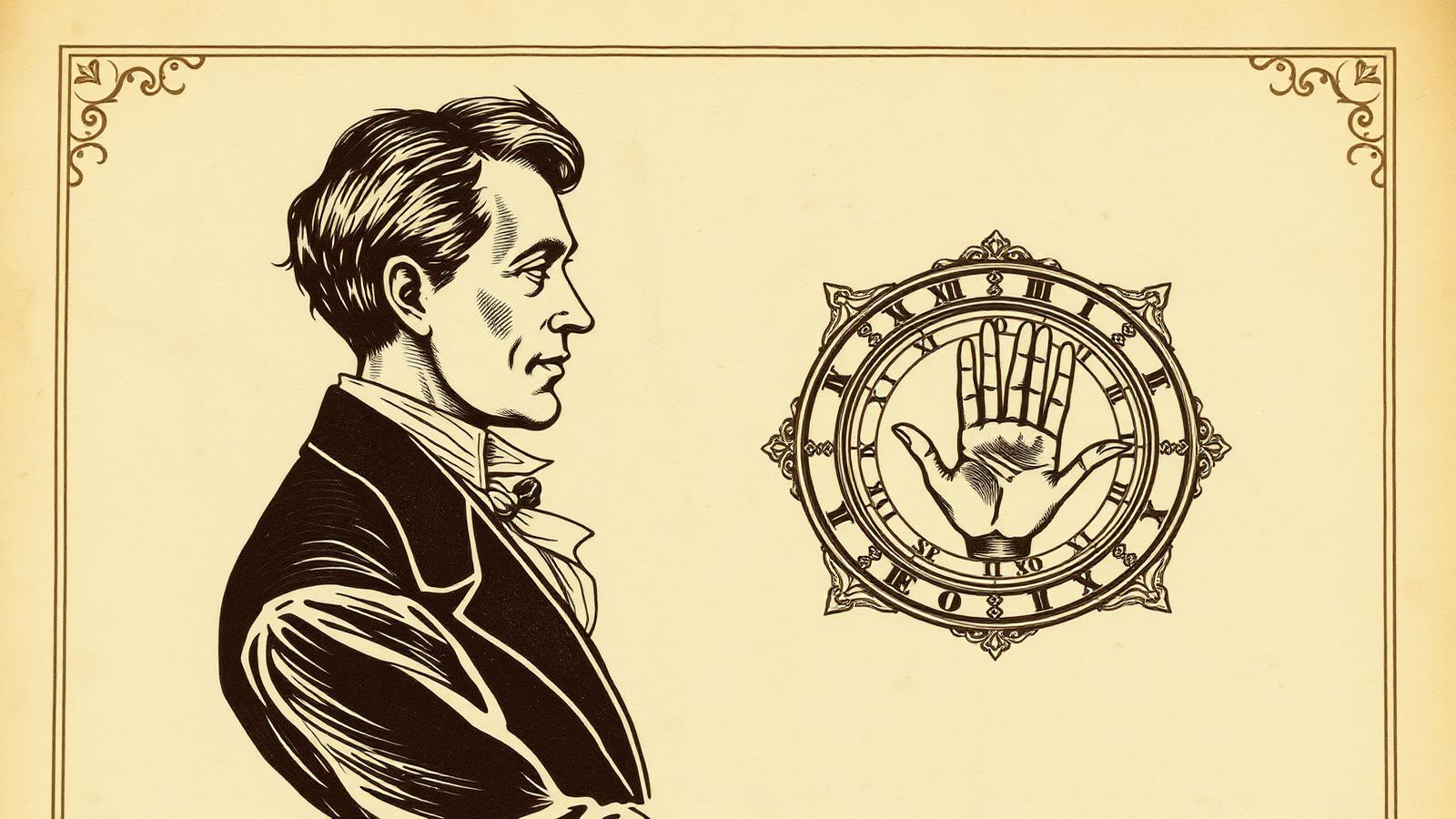
Cheiro was the pen name of William John Warner, an Irish palmist born in 1866 who read the hands of Mark Twain, Oscar Wilde, King Edward VII, and Sarah Bernhardt. He wrote the palmistry books that still frame how English-speaking readers learn the craft. If you have opened any modern palmistry book, you have read Cheiro whether you realized it or not.
The man behind the name
Cheiro was born William John Warner in Dublin in 1866. He took the name from cheiromancy, the Greek word for palm reading, and used it professionally for the rest of his life. He traveled to India as a young man, learned the tradition from Brahmin priests, and brought a synthesis of Indian palmistry back to London in his twenties. That trip is the reason most Western palmistry today reads a lot like Indian palmistry.
Who he read
Cheiro's client book is the reason his name survived. He read Mark Twain, who left him a signed testimonial. He read Oscar Wilde and warned him of trouble coming through his own hand, which Wilde later cited after his trial. He read King Edward VII and told him the year he would die. He read Grover Cleveland, Sarah Bernhardt, and General Kitchener, whom he warned would die at sea. Kitchener died in 1916 when his ship was torpedoed.
Not every prediction came true. Cheiro was open about that in his own writing. He treated palmistry as a reading of tendencies, not a lock on fate, and he wrote that a good reader tells the person what they can change as much as what they cannot.
The books that shaped the field
Palmistry for All (1916)
The beginner-facing book. It walks through the seven mounts, the four major lines, timing along the fate line, and the auspicious marks. Written in plain Edwardian English, still readable, still on the shelves of most working palmists. Public domain now, so you can find it free online.
The Language of the Hand (1897)
The earlier, heavier reference book. More on chirognomy (hand shape), more diagrams, and hand prints of the famous people Cheiro had read. Use it as the reference volume once you know the basics from Palmistry for All.
You and Your Hand (1932)
The late-career book aimed at a mass audience. Lighter than the earlier two, but still useful for how Cheiro talks about character reading versus prediction.
What his system looks like today
Open any modern palmistry book, English or otherwise, and you are reading a version of Cheiro's synthesis. The seven planetary mounts, the four major lines, the timing scale along the fate line, the reading of stars, triangles, and other signs, all of it comes from him.
What has changed is the tone. Cheiro wrote in an era when palmistry was still routinely used to predict death dates and marriage dates. Modern reading has pulled back from those hard predictions, because we have a hundred years of hindsight showing they were often wrong and often did more harm than good. The framework survived. The fatalism did not.
Why he matters for the credibility question
Cheiro is the answer to "is any of this real". He was a working reader for thirty years, kept a client book of the most photographed people alive, and made some predictions that came true and some that did not. He was not a fraud and he was not infallible. That middle ground is what palmistry actually looks like when it is practiced honestly, and the is palm reading real article goes further into it.
For the full modern picture, the palm reading guide is the hub. If you want your own hand read, the online palm reading is where to start.
Frequently asked questions
- Who was Cheiro?
- Cheiro was the pen name of William John Warner, an Irish palmist born in 1866 who worked in London, New York, and Paris. He read the hands of Mark Twain, Oscar Wilde, King Edward VII, Grover Cleveland, and Sarah Bernhardt, and wrote the palmistry books that shaped how English-speaking readers still learn today.
- Is Cheiro's Palmistry for All still worth reading?
- Yes, as a foundation. Palmistry for All is over a century old, so some of its social assumptions read as dated, but the line-by-line system is intact and most modern palmistry books quietly still use it. Start there if you want the classical framework.
- What is the Language of the Hand?
- The Language of the Hand was Cheiro's earlier, more technical book, first published in 1897. It is heavier on chirognomy (hand shape) and includes hand prints of famous people he had read. It is the reference book to Palmistry for All's beginner guide.
- Did Cheiro predict real events?
- He made several famous, verifiable predictions, including telling King Edward VII the year of his death and warning Lord Kitchener he would die at sea. He also made predictions that did not come true, and he was aware of it. He wrote that palmistry shows tendencies, not fixed fate.
- Is Cheiro's system the same as modern palmistry?
- Mostly yes. The seven mounts, the four major lines, the timing systems, and the auspicious marks in every modern palmistry book trace directly back to Cheiro's synthesis of the Indian and Western traditions. What has changed is the tone: modern reading drops most of the fatalism.
Keep reading
- Is Palm Reading Real? What Science & History Say
The honest answer, minus the mysticism and minus the sneer.
- Palm Reading: The Complete Guide to Palmistry
The full palmistry guide: every line, every mount, every hand shape in one place.
- Famous Palms: Elon Musk, Bill Gates & Celebrity Palm Readings
What palmistry writers have said about famous hands, from Silicon Valley to Bollywood.
- Online Palm Reading
Get your palm read online in minutes.