Foot reading: the lines and lucky signs on your feet
Foot reading, also called feet palmistry, reads the sole of the foot the same way palmistry reads the palm. It comes from the Indian tradition, where the soles were treated as revealing as the hands, especially for lifelong luck and spiritual patterns. Fewer big lines, more small symbols.
Where foot reading comes from
Foot reading is part of the same Indian tradition that produced palmistry (hast rekha). The soles of the feet were considered a second reading surface, less about the day-to-day and more about lifelong patterns and spiritual luck. Statues of gods and buddhas across Asia often show marks on the soles for exactly this reason: the tradition treats the feet as places where fortune is written slowly.
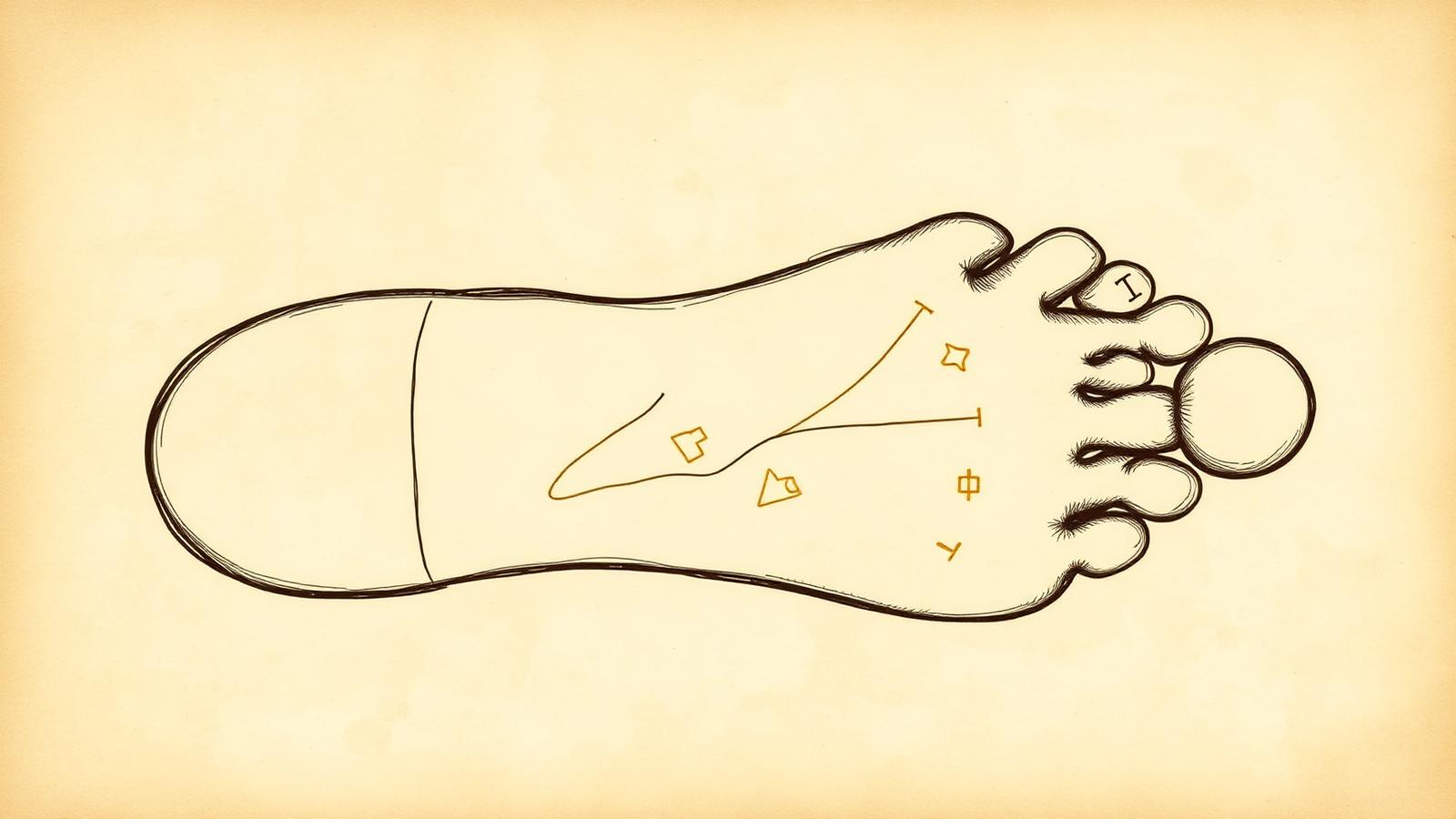
The main lines on the foot
The sole has fewer major lines than the palm. The most-read ones are a long line running along the inside arch (read as vitality and direction), a horizontal line across the ball of the foot (read as emotional life and how you attach), and small vertical lines near the base of the toes (read as relationships and children in traditional reading, though modern readers loosen this to close bonds in general).
The lucky signs on the foot
The auspicious signs foot reading looks for are close cousins of the ones you find in palmistry's lucky signs, with a few additions specific to the feet.
The fish (matsya)
A two-arc oval shape on the sole is considered one of the strongest lucky marks in Indian foot reading. It reads as long-lasting prosperity, spiritual insight, and family comfort. It is rare and usually develops slowly over years.
The conch (shankha)
A small spiral shape on the sole reads as leadership and spiritual authority in the traditional literature. In modern reading it softens to natural gravitas, the kind that makes people listen when you speak.
The lotus (padma)
A rounded, layered shape is called the lotus and reads as clarity, taste, and the kind of luck that arrives quietly. Rare.
The flag (dhwaja)
A small rectangular shape with a line running from it, resembling a flag on a pole, is read as recognition or fame in the tradition. Read carefully, this one is often mistaken for a random cluster of lines.
The wheel (chakra)
A near-circular shape with lines radiating out is called a wheel and reads as long-term influence, especially in a community or a family line.
Which foot to read
Follow the same rule as palm reading. Read the foot on the same side as your dominant hand for the current chapter of life. Read the foot on your non-dominant side for the baseline you were born with. Differences between the two feet read the same way as differences between the two hands: the current life is not the life you were set up for, for better or worse.
How to actually look at your own sole
Sit somewhere well lit. Clean feet, dry. Bend one knee up so the sole faces you and take a photo if you want to look at the marks in detail. Small symbols show up more clearly in a photo than in the mirror, and they change more slowly than palm lines. Photograph both feet once and you have a reference point for any changes over the next few years.
How foot reading fits with palm reading
Traditional readers use the feet as a second opinion. A pattern that shows up in the palm and the sole reads as more settled and long-standing than one that only shows in the hand. If the hand says one thing and the sole says another, palmists lean on the sole for lifelong questions and on the hand for the present chapter.
For the palm side of the picture, the palm reading guide is the hub. If you would rather send us a hand photo and get a written analysis back, the online palm reading is where to start.
Frequently asked questions
- What is foot reading?
- Foot reading, sometimes called feet palmistry, reads the lines and small symbols on the soles of the feet the same way palmistry reads the palms. It comes from the Indian tradition, where the soles of the feet were considered as revealing as the hands, especially for spiritual and lifelong luck.
- What lines do feet have?
- The sole shows fewer major lines than the palm, but the ones it does have are read as vitality, direction in life, and relationship patterns. Small symbols like the fish, the conch, the lotus, and the flag are considered the auspicious marks in traditional Indian foot reading.
- What does a fish sign on the foot mean?
- The fish (matsya) on the sole is considered one of the strongest lucky marks in Indian tradition, associated with prosperity, spiritual insight, and long-lasting comfort. It is rare and usually forms slowly over time rather than being present at birth.
- Are foot lines related to palm lines?
- Traditional readers treat feet as the mirror of the palms. In practice the readings often disagree, and palmists use the feet as a second opinion rather than a replacement. A pattern that shows in both hand and foot reads as more settled than one that only shows in the hand.
- Which foot do I read?
- Read the same foot as the hand you use for palm reading. Right-handed readers read the right foot for the present and the left for the inherited baseline. Left-handed readers swap the two. This mirrors the which-hand rule from palmistry.
Keep reading
- Lucky Signs in Palmistry: Stars, Triangles, Fish & Rare Symbols
Stars, triangles, fish, squares, and the bracelet lines that palmistry calls lucky.
- Palm Reading: The Complete Guide to Palmistry
The full palmistry guide: every line, every mount, every hand shape in one place.
- Letter M on Your Palm: The Rare Palmistry Meaning
What the M-shape formed by your palm lines actually means in palmistry folklore.
- Online Palm Reading
Get your palm read online in minutes.