Palm reading left or right hand: which one do you actually read?
Short answer: read your dominant hand for the life you are living now, and your non-dominant hand for what you were born with. Right-handed people read the right first. Left-handed people read the left. Ignore the old rule that split it by sex. The dominant-hand rule is what modern palmists use, and it is the one you want.
The one-sentence rule
Dominant hand for who you are becoming. Non-dominant hand for who you started as. If you write with your right hand, your right hand is the main read and your left is the reference. If you write with your left hand, flip it. If you are genuinely ambidextrous, use the one you feel more anchored in and treat both as active hands.
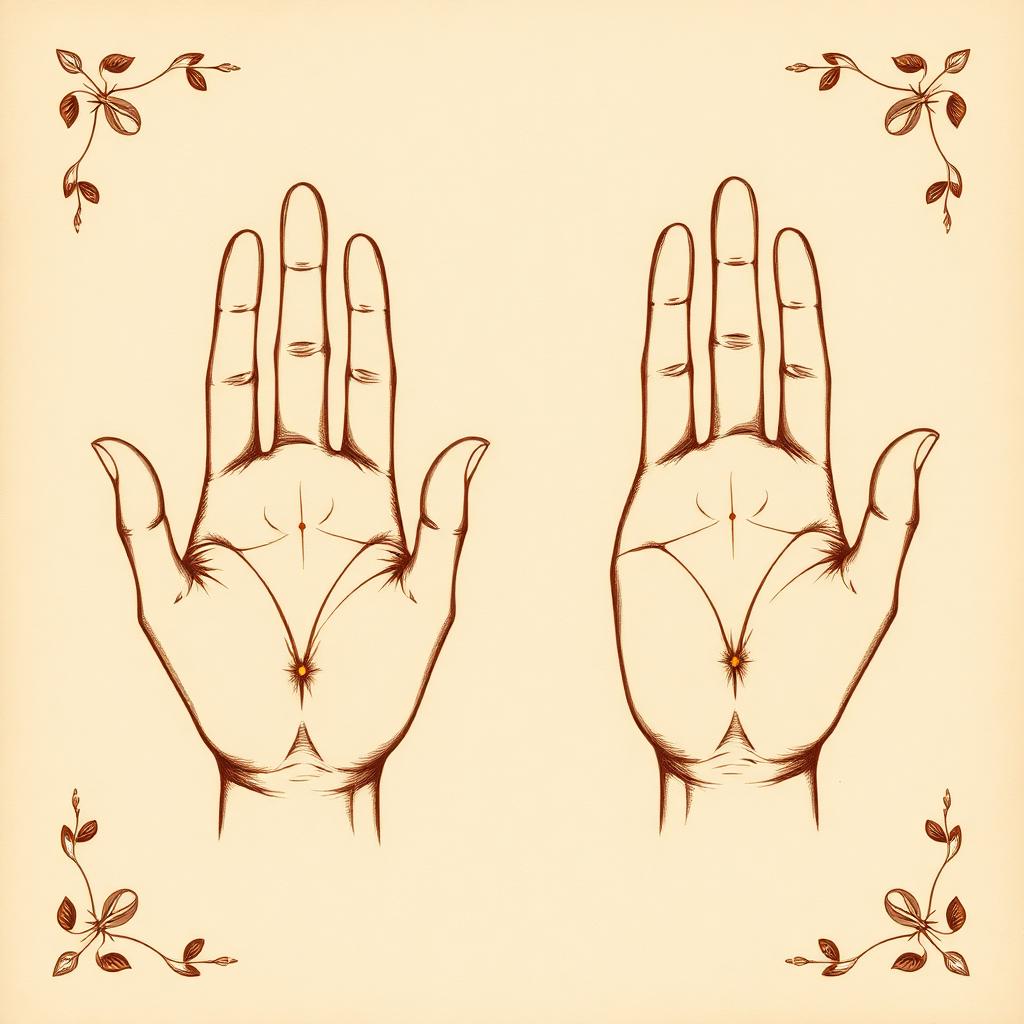
Why the two hands say different things
The hand you do not write with barely gets used. Its lines settle into a pattern early and drift very slowly. Readers treat it as a picture of your inherited setup: temperament, family shape, physical constitution, and the starting conditions you did not choose.
The hand you write with gets used constantly. Lines deepen, thin out, split, and close depending on what your life is doing. Stress at work leaves a mark. A calmer year smooths one out. That is why palmistry treats the dominant hand as the read of who you are becoming, not of what you were handed.
How to read the two hands together
The comparison is where a lot of the actual insight lives. Line up the same line on each hand and notice how they differ.
- Almost identical hands read as a life that has stayed close to its starting conditions. Not stuck; consistent. The person is still in roughly the same family, culture, and work world they grew up in.
- A dominant hand that looks deeper and busier than the non-dominant one reads as a life that has taken on more than it was set up for. More work, more relationships, more responsibility.
- A dominant hand that looks lighter and simpler than the non-dominant one reads as a deliberate stripping back. Someone who was raised in a complicated system and chose a quieter version of the same story.
- Two hands with very different line patterns read as a life that pivoted. Career change, culture change, big rupture. The gap is the reading.
The old sex-based rule and why to skip it
Traditional palmistry books, especially older Indian and European sources, said men should read the right hand and women the left. Some books said the opposite. The reasoning was never consistent, and modern palmists on both continents have quietly dropped it.
The dominant-hand rule works better for one straightforward reason: the hand that gets used tells the story of the life being lived. That is true regardless of the person's sex. If a source still splits the rule by gender, treat it as a period piece and use the modern version.
Special cases
Ambidextrous
If you use both hands about equally, read both as active hands. Compare them and take the average of the two rather than treating either one as the reference.
Injury or surgery on the dominant hand
Scar tissue and healed injuries can obscure lines. Read the non-dominant hand as the main read in that case and let the reader know why.
Children
Under about seven the hands have not settled into a stable pattern yet. Casual reading is fine. Serious interpretation is not, because the lines will move a lot before adulthood.
Which hand for a photo reading
For an online palm reading or an AI palm scanner, send a photo of your dominant hand. Hold your hand flat, fingers naturally spread, palm facing the camera under daylight. No filter, no flash. If the reader needs the second hand they will ask for it.
The full palm reading guide picks up from here with the four major lines. If you want the sex-specific write-ups, they are in palm reading for women and palm reading for men.
Frequently asked questions
- Which hand do you read in palmistry?
- Read your dominant hand for the life you are living now and your non-dominant hand for what you started with. Right-handed people read the right first. Left-handed people read the left. The other hand is the reference point, not the main read.
- Do men and women read different hands?
- Not anymore. Old palmistry books split the rule by sex and said men should read the right hand and women the left, or vice versa depending on the tradition. Modern palmists have almost all dropped this. Dominant hand for the current life, non-dominant hand for the starting point, regardless of gender.
- What does the non-dominant hand actually show?
- The hand you do not write with reads as your default settings: the temperament, family, and circumstances you were born into. Some readers call it the potential hand or the inherited hand. It moves the least over a lifetime because it reflects what has not been reshaped by daily choice.
- What does it mean if my two hands look very different?
- It usually means the life you were set up for is not the life you are actually living. That is not a bad thing. Big differences show up on people who changed careers, moved country, left the family they were raised in, or otherwise chose a different track than the one they were pointed at.
- Which hand do I use for a photo palm reading online?
- Photograph your dominant hand. If the reader wants a second photo, they will ask for the non-dominant hand as well. Daylight, palm flat, fingers naturally spread, no filter.
Keep reading
- Palm Reading: The Complete Guide to Palmistry
The full palmistry guide: every line, every mount, every hand shape in one place.
- Palm Reading for Women: Female Hand Lines Explained
A grounded, non-mystical read of the female hand: lines, love, work, and what the old books get wrong.
- Palm Reading for Men: Male Hand Lines Explained
The male hand read straight, without the old marriage line myths.
- How to Read Palms: Palm Reading for Beginners
A step by step walk through a first palm reading, in plain language.