How to read palms: a beginner's walk through your first reading
Palm reading for beginners is simpler than most books make it sound. Use your dominant hand, find the four major lines, read them in a set order, and stop before you overread. That is the whole method. This is the fifteen-minute version, written the way a friend who reads palms would actually walk you through it.
Before you start, one setting rule. Palmistry is a self-reflection tool with a long tradition, not a prediction machine. A first reading tells you something honest about your temperament. It does not tell you the date you get married or the year you die. Anyone who promises that is doing theater.
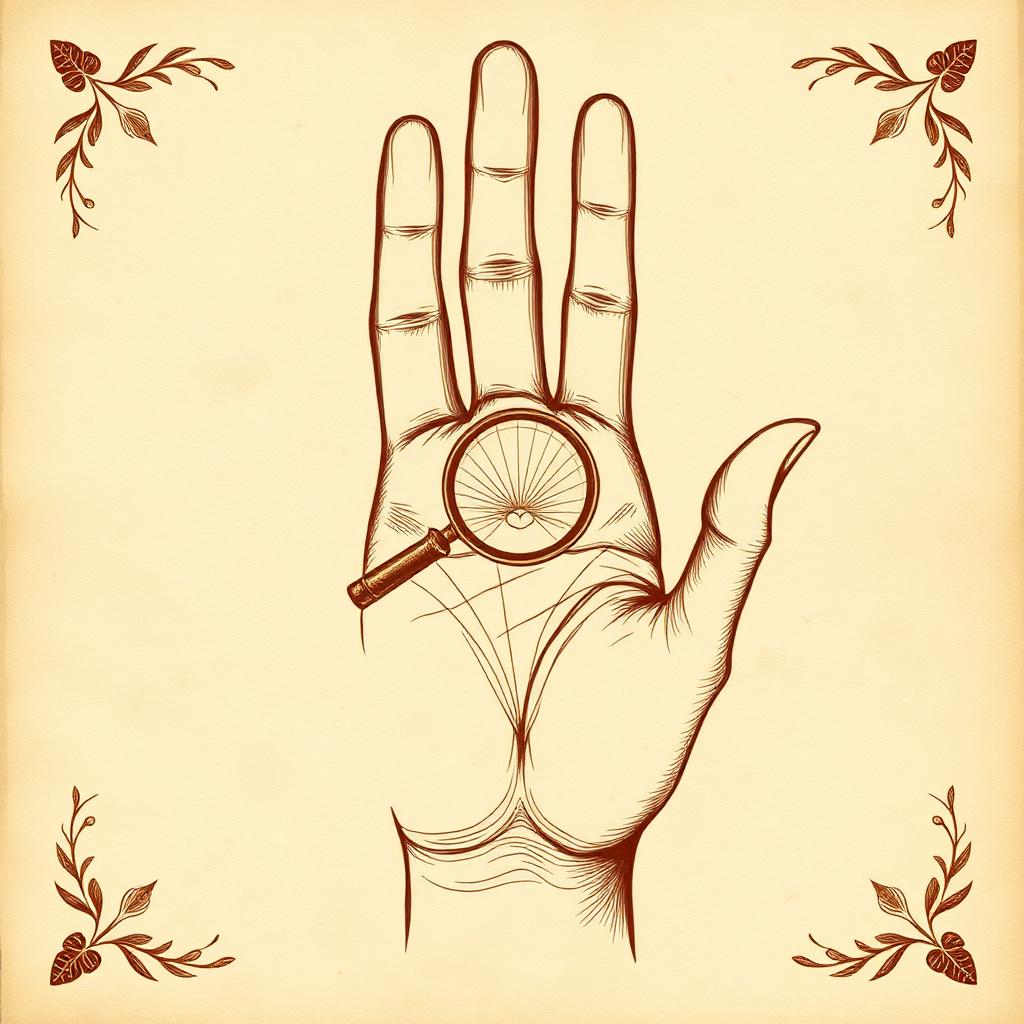
Step 1. Pick the right hand
Use your dominant hand for the main read. If you write with your right hand, read the right. If you write with your left, read the left. The other hand is the reference point. The full logic is in which hand to read, but the short version is: dominant hand for who you are becoming, non-dominant for what you started with.
Step 2. Set the scene
Sit in daylight or under a bright warm bulb. Rest your palm flat on your leg or a table, fingers naturally spread. Cold hands hide fine lines, so warm them if they are chilly. A phone camera helps if you want to photograph the palm and read from the picture. Reading from a photo is easier than reading from your own hand at arm's length.
Step 3. Look at the whole hand first
Do not go straight to the lines. Take a slow look at the shape of the palm, the length of the fingers, and which of the fleshy pads (the mounts) stands out most. Long fingers on a rectangular palm read differently from short fingers on a square one. The shape is the container the lines run through.
Step 4. Find the four major lines
Four lines carry most of the reading.
- The heart line runs horizontally across the top of the palm, under the fingers.
- The head line runs horizontally under the heart line, across the middle of the palm.
- The life line curves around the base of the thumb, from between thumb and index finger down toward the wrist.
- The fate line, when it exists, runs vertically up the middle of the palm toward the base of the middle finger.
Trace each one with your eye first. Note where it starts, where it ends, and any obvious breaks, chains, or forks. Do not interpret yet.
Step 5. Read the lines in order
Heart first. It tells you how you love, attach, and fight. See the heart line guide for detail.
Head next. It tells you how you think and how much your mind wanders. Straight and firm reads as practical and focused. Curving down reads as imaginative. Wavy reads as easily distracted or genuinely improvisational.
Then the life line. It reads as vitality and how much energy you have to spend, not as how long you will live.
Finally, the fate line for direction and career. Skip this one if you do not have one; the absence is its own reading.
Step 6. Compare the two hands
Now look at your non-dominant hand and compare. Two hands that look nearly identical belong to a life that has stayed close to its starting conditions. Two hands that look very different belong to a life that pivoted. The gap between them is where the interesting reading lives.
Step 7. Stop before you overread
A first reading covers the four majors, the dominant mount, and the comparison between the two hands. That is enough for real insight. Do not chase every minor line, chain, and mark on the first pass. Minor lines are for the second or third reading. Signs like stars, triangles, and the letter M are for later still. Overreading kills accuracy faster than anything else.
What to do next
If you want the full library of line meanings, work through the palm reading guide one line at a time. If you would rather skip the DIY, upload a photo of your hand for an online palm reading and let a reader do the interpretation.
Frequently asked questions
- How do you read palms for beginners?
- Start with your dominant hand, find the four major lines (heart, head, life, fate), and read them in that order. Compare the two hands only after you have read the dominant one. Ignore the minor lines and signs on your first pass. A first reading takes about ten minutes and should stop before you start guessing.
- How long does a palm reading take?
- A basic self-reading takes ten to fifteen minutes. A thorough reading by a professional takes thirty to sixty. Photo readings from an online reader are usually returned within a day.
- Can you read your own palm?
- Yes, and it is the best way to learn. The catch is that self-reading tends to be overconfident on the parts you want to hear and overcautious on the parts you do not. Photograph your palm and read from the photo. It puts a little distance between you and the reading.
- What do you need for palm reading?
- Your hand, daylight, and about fifteen minutes. No candles, no crystals, no props. A phone camera is useful if you want to keep a record of how your lines change over time.
- Is palm reading accurate?
- Palmistry is not a prediction system. It is a self-reflection tool with a long tradition. Treat a reading as a prompt to notice something about your life, not as a forecast. Read anyone who promises specific dates, deaths, or dollar amounts as an entertainer, not a palmist.
Keep reading
- Palm Reading: The Complete Guide to Palmistry
The full palmistry guide: every line, every mount, every hand shape in one place.
- Which Hand to Read in Palmistry?
Left or right? A short answer for beginners.
- Palmistry Mounts: The 8 Mounts of the Hand & Their Meanings
Venus, Jupiter, Saturn, Apollo, Mercury, Luna, and the two Mars mounts, without the mystical fog.
- Online Palm Reading
Get your palm read online in minutes.